Resources
Getting sheets cut at the store: how to prepare your cut list
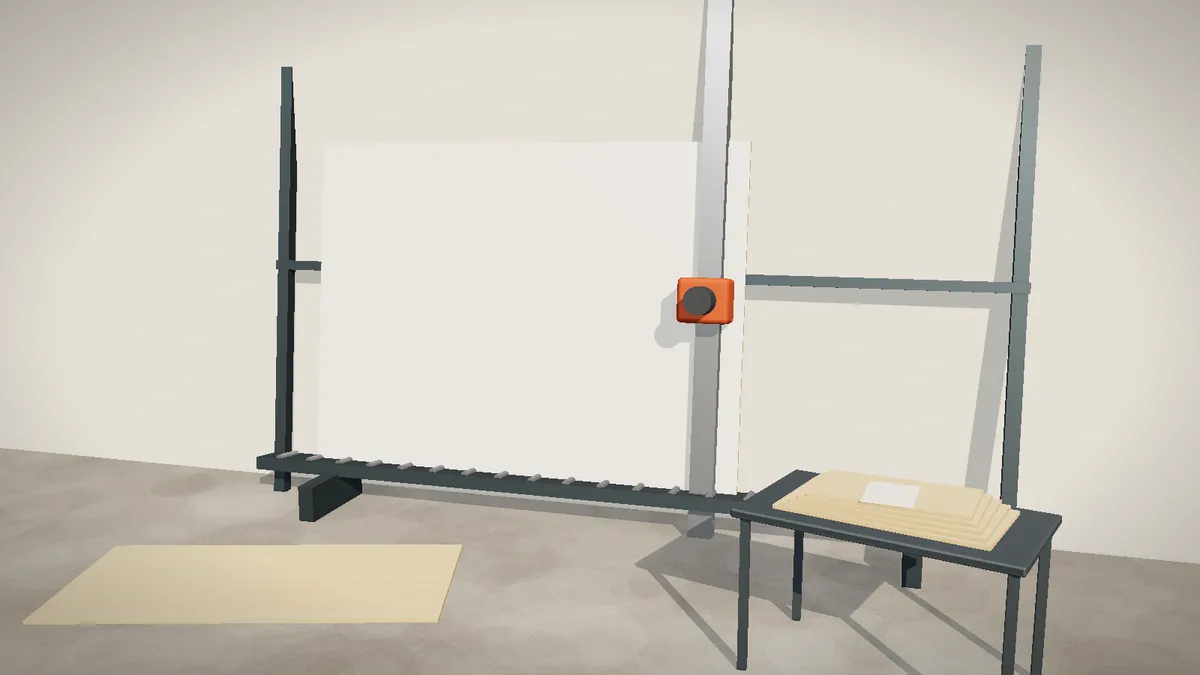
Many home centers and lumberyards will cut sheet goods on a panel saw. That solves the problem of getting a 4 × 8 sheet home in a small car. Prepared well, you get the pieces you need, and you know what to finish yourself.
In short: Ask about cost, accuracy and limits first; store panel saws can be off by up to about ⅛ in. Plan with the store’s real sheet size, usually 48 × 96 in, number the parts and bring the printed plan with edge-to-edge cuts. Cut small parts, miters and tight fits at home.
Updated November 11, 2026 · CuttingFox team
CuttingFox does the math for you: enter your sizes and get a cutting plan, free and with no sign-up.Start planning →
What to ask first
- Cost and limits: some stores cut a few pieces for free and charge for more; others only make cuts for transport. Ask before you hand over a long list.
- Accuracy: store panel saws are often meant for breakdown cuts, not furniture-grade precision. Expect up to about ⅛ in variation unless the store says otherwise.
- Minimum sizes: very narrow strips or small pieces are often not cut.
- Kerf: ask for the panel saw’s kerf and enter it in the planner; ⅛ in is a reasonable assumption.
What a good cut list looks like
- Plan with the store’s actual sheet size, usually 48 × 96 in.
- Give every part a number and a label.
- Print the cutting plan with its sequence. Edge-to-edge cuts translate directly to a panel saw.
- Mark which offcuts you want to take home.
- Check two or three parts with a tape measure before everything is cut.
What to cut at home
Small parts, miters, cutouts and tight-fitting pieces are better cut in your shop. Have the store break the sheet into manageable pieces with about ¼ in extra, then trim them to final size yourself.